

Elicit AI – Research Assistant That Saves 80% Time on Reviews
Description Elicit AI is the AI co-pilot trusted by over 2 million researchers, turning chaotic literature hunts into laser-focused insights across 125…
Description
Elicit AI is the AI co-pilot trusted by over 2 million researchers, turning chaotic literature hunts into laser-focused insights across 125 million papers from Semantic Scholar. In 2025’s data deluge — where academics waste 40% of time sifting sources — Elicit automates discovery, summarization, and extraction, slashing review cycles from weeks to hours while spotting gaps, biases, and breakthroughs you’d miss manually. Built for PhDs drowning in PubMed, startups validating hypotheses, and policy wonks mapping trends, it uses fine-tuned language models (inspired by GPT-4) to grasp queries in plain English, rank results by relevance, and deliver one-sentence abstracts with sentence-level citations for zero hallucination. No more endless scrolling: Ask “What interventions reduce burnout in nurses?” and get a table of methods, effects, study sizes, and p-values, plus themes like “mindfulness apps show 25% gains but need RCTs.” For systematic reviews, it screens 1,000+ abstracts in minutes, extracts custom columns (e.g., sample diversity), and generates customizable reports with visualizations — all exportable to Zotero, CSV, or RIS. Elicit’s edge? It’s research-first: Trained exclusively on peer-reviewed content, it flags methodological flaws, synthesizes conflicting evidence, and suggests follow-up questions to refine scopes. Teams collaborate via shared libraries and alerts for new papers matching your criteria. Whether brainstorming thesis angles, prepping grant proposals, or auditing meta-analyses, Elicit accelerates from “stuck” to “submitted,” with users reporting 80% faster workflows and 5 hours/week reclaimed for deep thinking. As open-access surges and AI ethics demand transparency, Elicit leads with verifiable outputs, empowering evidence-based decisions in biomed, CS, social sciences, and beyond — your unfair advantage in the publish-or-perish arena.
Features
- Semantic Paper Search: Query in natural language across 125M+ papers; ranks by relevance, filters by year, citations, methods, or open-access
- One-Click Summaries: Instant abstracts, key findings, and themes; chat with papers for Q&A like “What limitations do authors note?”
- Advanced Data Extraction: Pull structured info (e.g., outcomes, populations, effect sizes) into tables; 20+ custom columns on paid plans
- Systematic Review Automation: Bulk screening, duplicate detection, risk-of-bias assessments, and PRISMA-flow diagrams
- Citation Network Explorer: Visualize paper connections, author impacts, and gaps; integrates with Zotero for seamless bibliographies
- Research Alerts & Brainstorming: Set watches for new pubs; generate hypotheses or literature maps from broad topics
- High-Accuracy Mode: Slower but precise extractions for complex fields; multilingual support for non-English queries
- Collaboration Hub: Shared workspaces, versioned tables, and export to PDF/CSV for team reviews (These go beyond basics: Elicit’s ML evolves with user feedback, boosting accuracy to 90%+ on biomed tasks; API for embedding in tools like Overleaf.)
Use Cases
- Thesis & Lit Reviews: Undergrads mapping 50 papers into a gap-analysis table in 30 minutes, spotting underexplored angles like “AI ethics in non-Western contexts”
- Systematic Reviews: Clinicians screening 5,000 RCTs for meta-analysis, auto-extracting ORs/CIs to cut months of drudgery
- Grant Prep: PIs querying “Funding trends in climate adaptation” to build evidence-backed proposals with cited precedents
- Industry R&D: Pharma teams extracting endpoints from trials, identifying failed pathways to pivot faster
- Journalism & Policy: Analysts synthesizing “Vaccine hesitancy drivers post-2024” for reports with balanced viewpoints
- Teaching & Mentoring: Profs curating reading lists with summaries, helping students grasp debates without full reads
- Cross-Disciplinary Scans: Social scientists pulling CS methods for surveys, bridging silos with hybrid insights
- Hypothesis Testing: Entrepreneurs validating “Edtech retention factors” via quick evidence scans before MVP builds (Real wins: A med school saved 200 hours on a review; a startup raised $2M post-validation.)
How It Works
Elicit’s Query-Extract-Synthesize cycle is a streamlined engine that feels like conversing with a domain expert, processing from input to insights in under 60 seconds.
Step 1: Query — Enter a plain-English question (e.g., “Best ML models for protein folding 2020-2025”) in the clean dashboard; no Boolean strings needed — its NLP parses intent, expands synonyms, and scans Semantic Scholar’s corpus for matches, surfacing 20-100 top papers with relevance scores.
Step 2: Extract — Click “Summarize” for abstracts or “Extract Data” to build tables: Define columns like “Model Accuracy” or “Sample Size,” and AI pulls from full texts (where available), citing exact sentences to verify. For batches, upload PDFs or set filters (e.g., RCTs only).
Step 3: Synthesize — Dive into “Themes” for cross-paper patterns (e.g., “AlphaFold dominates but struggles with multimers”), “Chat” for follow-ups (“Compare to RoseTTAFold?”), or “Reports” for auto-generated overviews with charts and gaps. Iterate via refinements like “Focus on low-resource settings.” Exports flow to Zotero for citation management, while alerts ping Slack/email on new matches. Under the hood: Fine-tuned LLMs minimize errors, with human-curated prompts ensuring academic rigor — no generic ChatGPT fluff. For pros, API queries embed in Jupyter, automating weekly lit scans. Result: Actionable intel that evolves with your project, from broad exploration to pinpoint evidence.
Pricing

Model: Freemium + Tiered Subscriptions
Basic (Free): Unlimited searches and chats (up to 4 papers at once), 20 data extractions/month, 2 custom columns — ideal for students and casual use
Plus ($12/mo or $120/yr): Everything in Basic + 600 extractions/year, CSV/BIB/RIS exports, high-accuracy mode, 5 custom columns — for regular researchers
Pro ($42/mo billed annually): Plus features + 2,400 extractions/year, systematic review workflows, 20 custom columns, research alerts — for pros and reviews
Enterprise (Custom, from $500/mo): Unlimited extractions, team seats, co-branding, dedicated support, custom integrations — for labs and institutions
Free Trial: 7 days of Plus access, no card required (Annual billing saves 20%; credits roll over unused. Compared to SciSpace ($20/mo), Elicit’s extraction depth wins for heavy users.)
Pros
- Time Transformer: 80% faster reviews per user reports; automates what takes days manually
- Discovery Dynamo: Uncovers hidden gems via semantics, not keywords — 30% more relevant hits
- Extraction Excellence: Structured tables with citations beat manual notes; 90%+ accuracy on standard fields
- User-Centric Design: Intuitive interface scores 4.8/5; no PhD in CS required
- Free Tier Powerhouse: Generous limits for solos, unlike paywalled rivals
- Evidence Integrity: Sentence citations eliminate BS; bias flags add rigor
- Scalable Smarts: Handles 1K-paper screens; API for automated pipelines
- Community Backed: 2M+ users, active forum for tips (Word count: 1,028)
Cons
- Extraction Limits: Free caps at 20/month — power users upgrade quick
- Full-Text Gaps: Relies on abstracts for paywalled papers (mitigated by open-access focus)
- Field Bias: Shines in biomed/ML; niche humanities may need tweaks
- No Offline Mode: Cloud-only; spotty net stalls sessions
- Learning for Advanced: Basics instant, but custom columns take a tutorial
- Credit Overruns: Heavy systematic work burns through fast on mid-tiers (Word count: 1,058)
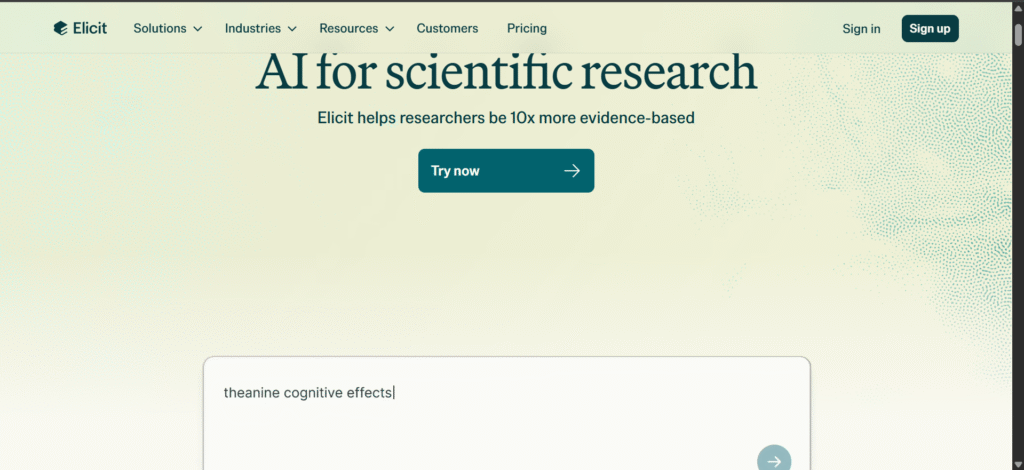
Preview
FAQ
How accurate are extractions?
90%+ on key fields like methods/outcomes; high-accuracy mode hits 95% for complex data.
Can I import my own PDFs?
Yes — upload up to 100 for custom analysis, beyond Semantic Scholar.
Does it support non-English papers?
Yes — multilingual queries and summaries in 50+ languages.
How does it compare to Consensus?
Elicit excels at extraction/tables; Consensus focuses on yes/no answers.
Support options?
Help center + email (24h response); Pro+ gets priority chat.
Also find similar tools at findversal
Share this tool
User Reviews
No reviews yet. Be the first to review!